Health and Safety Policy for Office Clearance Merton
Purpose: This policy sets out the health and safety approach for office removal and clearance operations carried out by the company in its rubbish removal and waste clearance service area. It applies to staff, contractors and anyone who may be affected by our office clearance activities and rubbish collection services. The objective is to prevent injury and ill-health, protect property and the environment, and ensure that every clearance job is completed safely and efficiently.Scope and application
The policy covers all office clearing tasks including furniture removal, confidential waste handling, light demolition, and routine rubbish collection during clearance projects. It applies to scheduled clear-outs, emergency removals, and associated transport and storage. The policy is relevant to all parts of the removal and rubbish company service area operations and supports safe working whether work is inside a client building, in communal areas, or during transit.
Responsibilities
Senior management retains overall responsibility for health and safety, while supervisors and team leaders are accountable for putting the policy into practice on site. All employees must take reasonable care for their own and others’ safety, follow safe systems of work, and report hazards and incidents promptly. Key responsibilities include:- Risk assessment: Conduct and document pre-job risk assessments for every office clearance and rubbish removal task.
- Training: Ensure staff receive appropriate training in manual handling, use of trolleys and lifting equipment, hazardous materials awareness, and vehicle safety.
- PPE and equipment: Provide and enforce use of personal protective equipment and maintain tools and vehicles.
To manage risks associated with the clearance service, team leaders must ensure that method statements are prepared where appropriate and that staff understand traffic routes, loading procedures and secure loading practices. Emphasis is placed on preventing musculoskeletal injuries through correct lifting techniques, use of mechanical aids, and team lifts for heavy items.
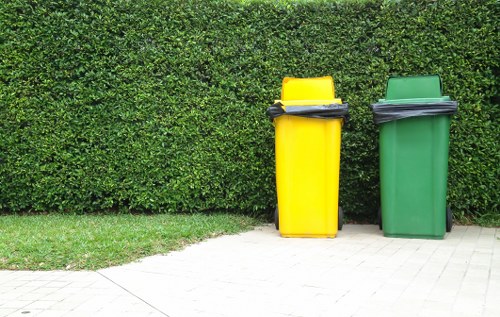 Risk management and controls — Risk management for the rubbish removal and office clearance service area follows a hierarchy of control: avoid, reduce, isolate, engineer, administrate and use PPE. Common hazards include manual handling, slips, trips and falls, sharps and broken glass, hazardous materials in waste streams, vehicle movements, and working at height when moving large items through stairwells. Controls implemented include clear segregation of waste streams, robust packaging of sharp items and confidential materials, safe stacking and storage, and vehicle load securing procedures.
Training and competence
All staff engaged in office clearance or rubbish removal work must be competent for the tasks they undertake. Training covers:- Manual handling and ergonomic techniques,
- Use of lifting aids, trolleys and tail-lifts,
- Hazardous waste recognition and segregation,
- Vehicle safety and secure load management,
- Emergency procedures and first-aid awareness.
Personal protective equipment (PPE)
Appropriate PPE is provided and must be worn for tasks such as handling waste, sorting materials, and loading vehicles. Equipment includes but is not limited to gloves, high-visibility clothing, protective footwear, eye protection and, where necessary, respiratory protection. PPE is a last control measure and is used in combination with other controls to reduce risk. Hazardous substances and segregation — The rubbish company service area handles varied waste types. Staff are trained to identify suspect hazardous items (chemicals, batteries, asbestos-type materials, sharps) and to segregate them safely. Hazardous items are not to be transported with general office waste unless appropriately packaged and labelled. Where specialist disposal is required, the procedure is to isolate the item and inform the supervisor to arrange authorised handling and disposal.
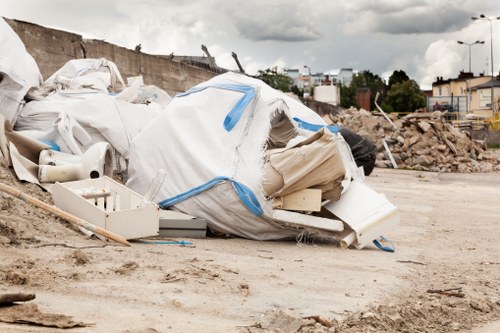 Incident reporting, first aid and emergency response — All incidents, near-misses and injuries must be reported immediately via the company reporting system so that corrective actions can be taken to prevent recurrence. First-aid arrangements are in place for all sites and vehicles. Emergency procedures include evacuation routes during on-site incidents, safe isolation of hazards, and procedures for dealing with spills or accidental exposure to hazardous substances.
Monitoring, review and continuous improvement — The policy is monitored through routine inspections, audits, and review of incident reports. Performance in the office clearance and rubbish removal service area is measured to identify trends and implement improvements. This policy will be reviewed periodically and when there are significant changes to operations, equipment, or personnel to ensure it remains effective and aligned with best practice. Employees are encouraged to contribute ideas for safer working and to take an active part in safety briefings and toolbox talks.
Behaviour and culture
Safety depends on a positive culture where everyone takes responsibility. Staff are expected to work cooperatively, follow procedures, challenge unsafe behaviour and respect the wellbeing of colleagues and the public. Supervisors will lead by example, ensuring safety measures are not compromised to meet time pressures during clearances or removals.Operational controls and vehicle safety
Vehicles used for office clearance and rubbish collection are maintained to a high standard, with checks before every shift. Drivers and loaders must secure loads, use appropriate signage, and follow safe routing and parking practices to protect workers and members of the public. Loading practices prioritise stability, weight distribution and protection of items to avoid sudden shifts during transit.Conclusion: This health and safety policy provides a framework to manage risks associated with office clearance and rubbish removal activities. It combines management commitment, competent staff, practical controls and ongoing review to protect people and property and to support a safe, efficient clearance service operation.
